Roaming around Hong Kong’s Time Square with HDR post-processing
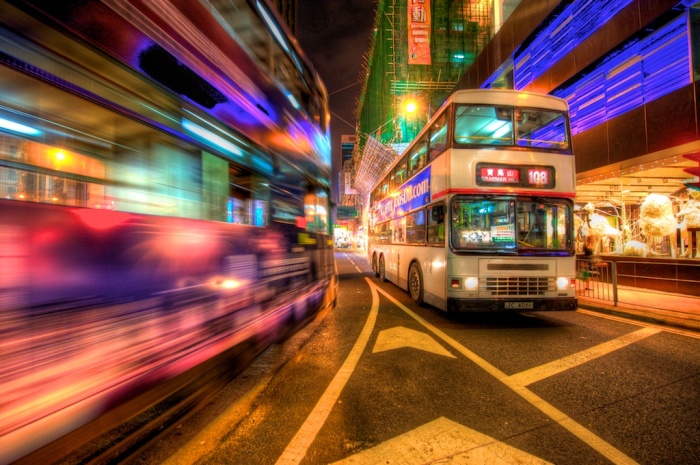
Standing on a traffic island with camera and tripod.
I’ve had HDR (high dynamic range) software for a couple of years and just never gotten around to experimenting with it. Sitting around on a holiday with nothing to do, I decided to play with it. HDR allows for an exaggerated range of luminance that takes a photo into the abstract and obviously loses it connection to reality. Not everyone likes the results. I happen to think that it works pretty well with night shots in a brightly lit urban environment. However, a little can be insufferable sometimes.
All photos shot with a Nikon D700 and Nikkor AFS 14-24mm f/2.8 zoom lens. Post processing with Capture One, Aperture 3 and Photomatrix HDR Tone Mapping software.

Old and the new.
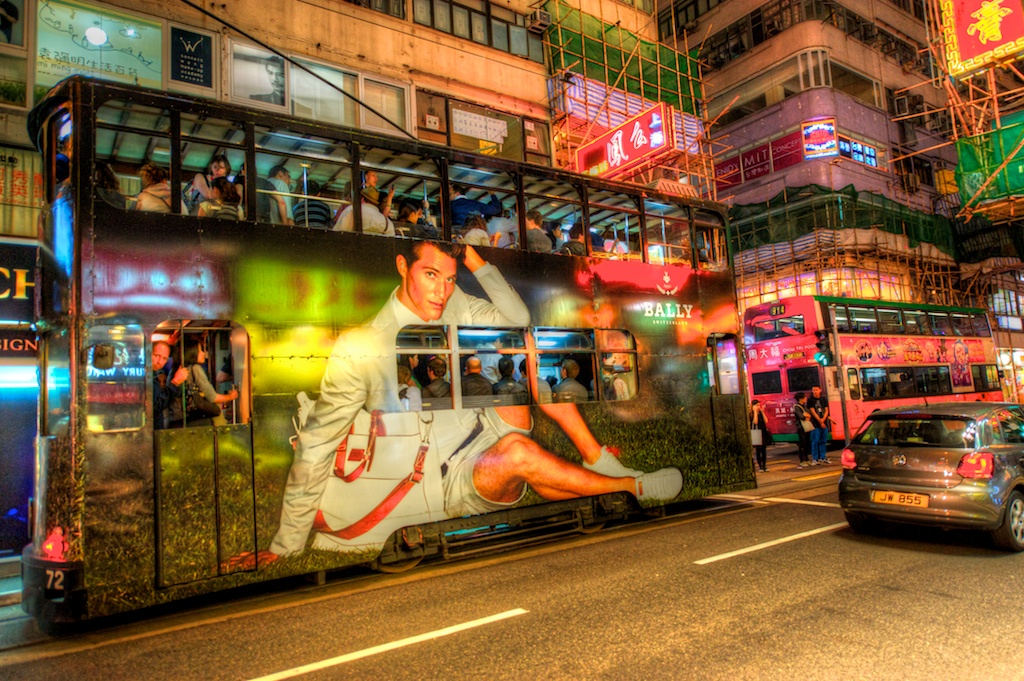
Bus Stop.
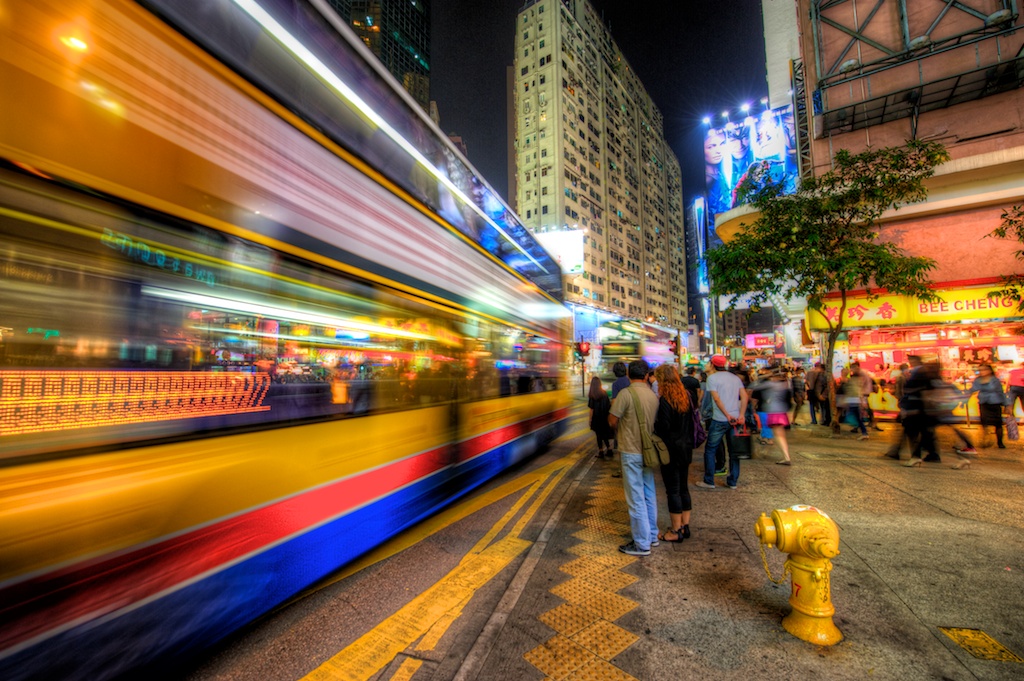
Waiting for the bus.
A wet Songkhran on Silom Road today
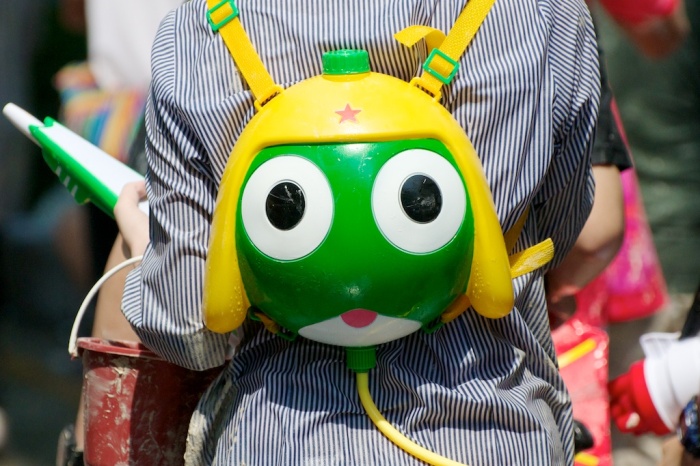
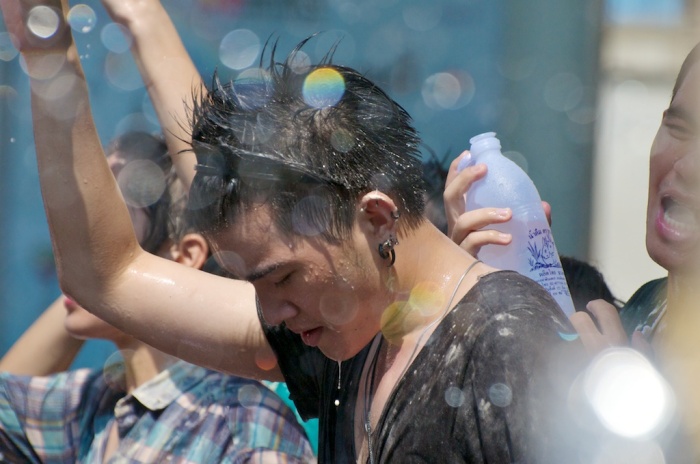
For the first time in ten years, I celebrated Songkhran, the Thai New Year, in Thailand. Usually I duck the holiday by travelling abroad for the first two weeks in April. This year I cancelled a trip to Japan and found myself spending this week in Bangkok.

"Getting ready to squirt"
Usually people in Bangkok celebrate on Silom or Khao San Road. It’s one big water fight with all manner of water weapons, from the smallest squirt gun to a shoulder weapon that is similar in size to a RPG launcher. Some celebrants resort to throwing ice cold water from buckets. And then there’s the fire hydrants. Quite a wet day. Nowadays, partiers also smear a water-soluble powder on faces as you can see from some of these photos.
Silom was closed to traffic for the day and there must have been fifty thousand “water babies” engaging in hand to hand combat at five paces with water guns. And the smeary powdery liquid. Although it sounds like the makings of a disaster, it was great fun.
For today’s raucous time, I used my Nikon D300s and the AF-S Nikkor 70-300mm f4.5-5.6 VR zoom lens. I didn’t want to risk other more expensive lenses, knowing that the lens (and camera) would get a soaking. As a ready holster, I used my waterproof Ortlieb shoulder bag, unzipped. Although the camera came under some “attack” from the squirt guns, all in all, it survived with no problems. After I reached home, I thoroughly dried the camera and lens. Good as new.
At times, I thought I should have brought another lens or two (14-24 or 24-70 zoom lenses) but felt it was wiser to restrict potential disaster to one lens. Afterwards I realized that I should have used my AF-D 28-200mm f3.5-5.6 for its wider angle instead of the 70-300. Oh well, there’s always next year.
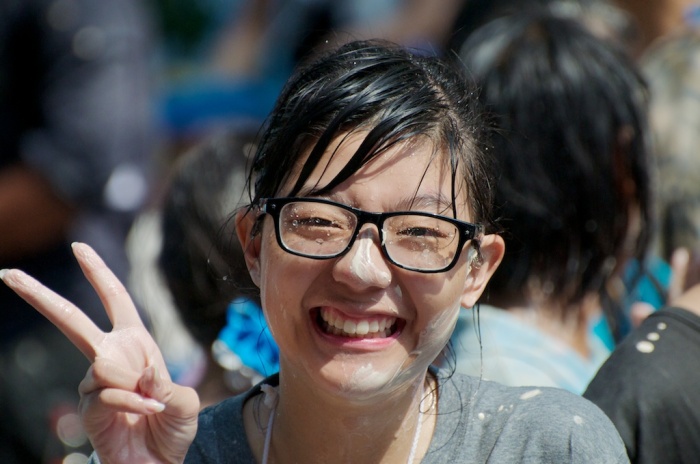
"Posing for the pic"
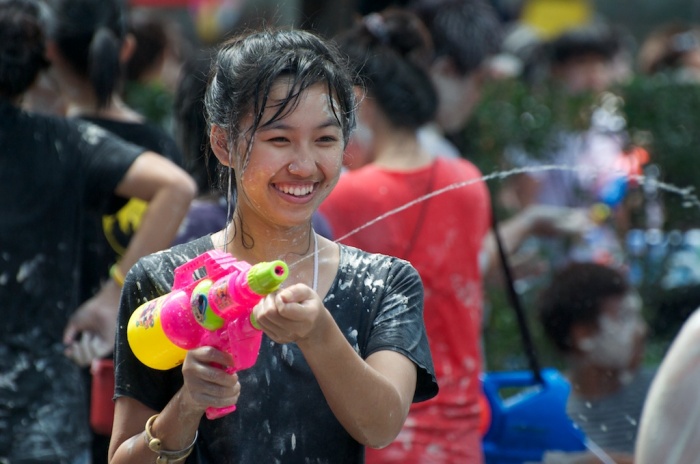
"Didn't get me"
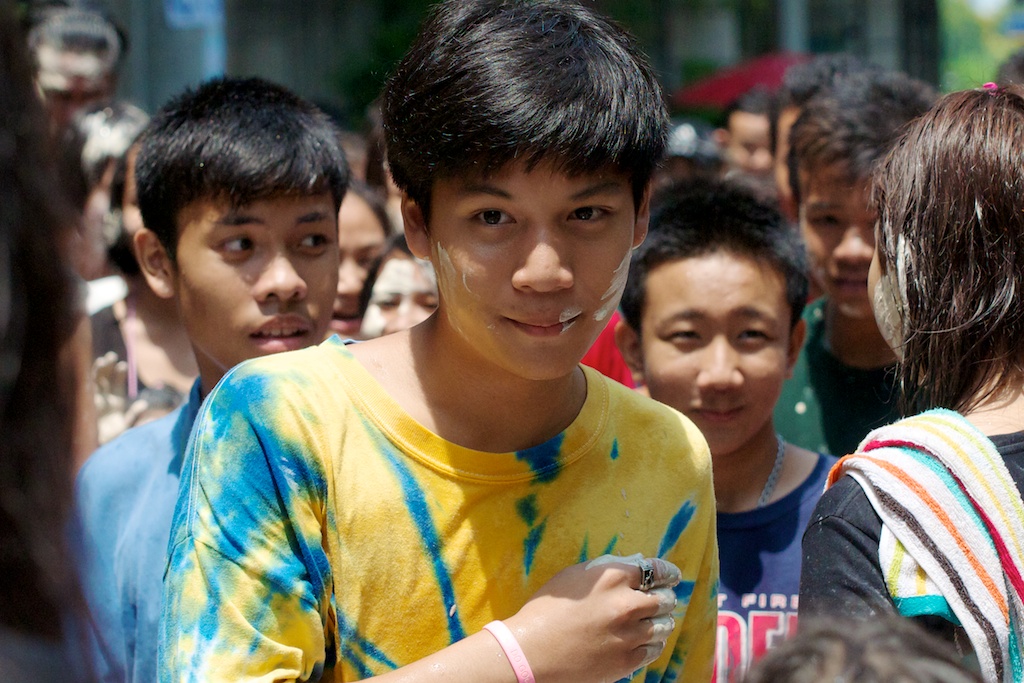
"Time to get wet"
Hong Kong wet market fish with Nikon fisheye lens.
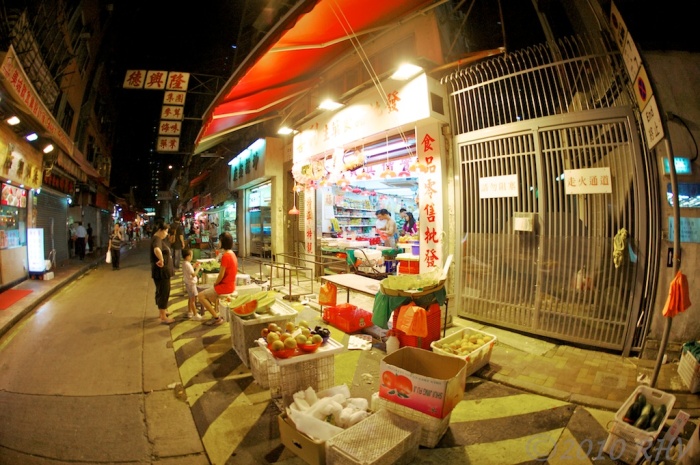
Approaching wet market from Hennesy Road.
Whenever I visit Hong Kong, I like to stay in the Causeway Bay area for its vibrancy. From street food to street shopping, there is plenty to do in the area. This wet market is across the road from Times Square and is an great place to visit as evening shopping draws to a close. Earlier in the day, it can be crowded with people which can impede one’s chances to take photos of the market’s offerings. Just around the corner from this location are a number of high end restaurants and shops that are the modern Causeway Bay. The market is a vestige of an earlier time that will someday disappear and become the latest skyscraper. Enjoy while you can.
Photos were shots with a Nikon D700 and AF Fisheye Nikkor 16mm f/2.8 lens.
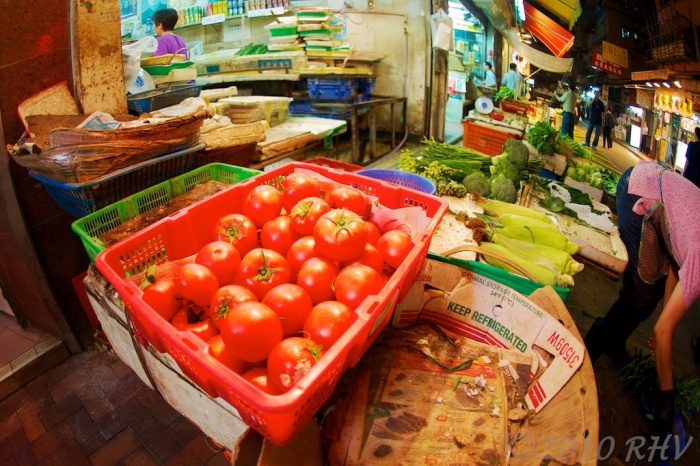
Fish-eye tomatoes.
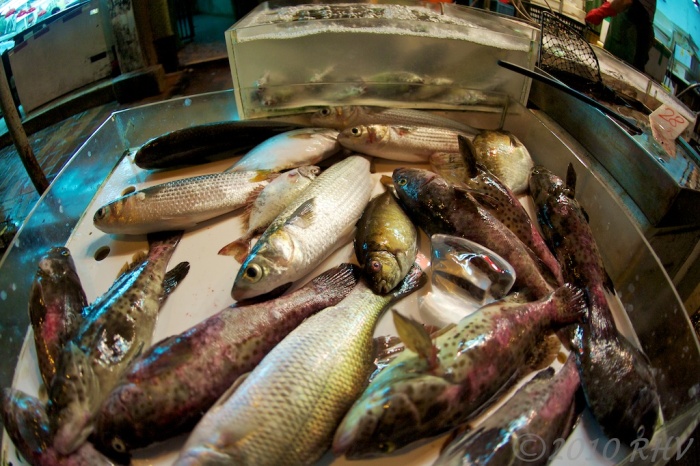
Fish-eye fish.
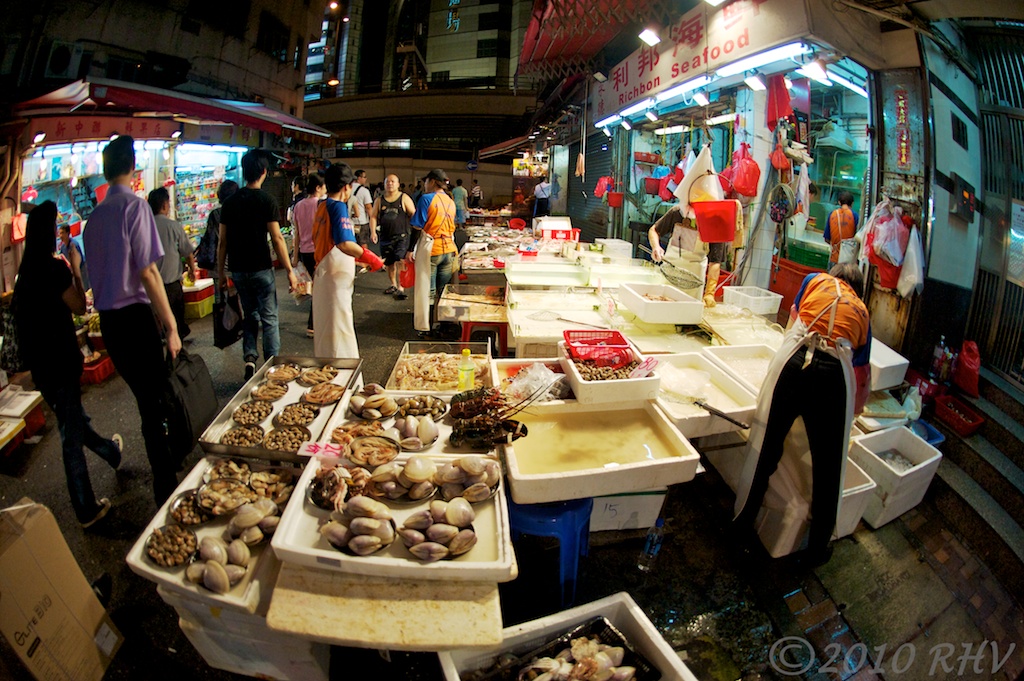
Typical view at market.
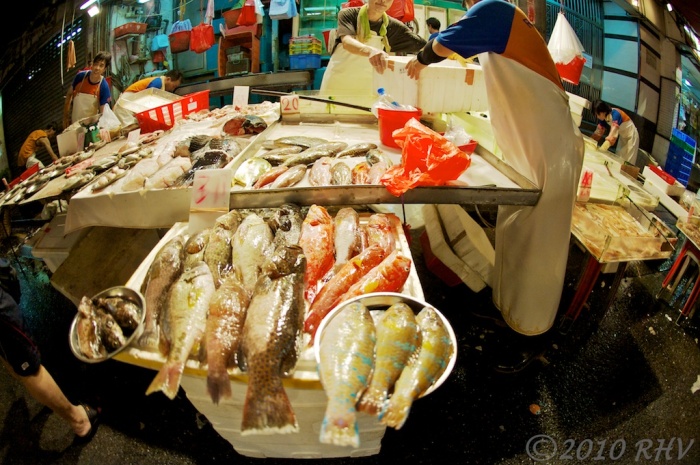
Close-up.
The “Gateway To India” Arch in Mumbai.
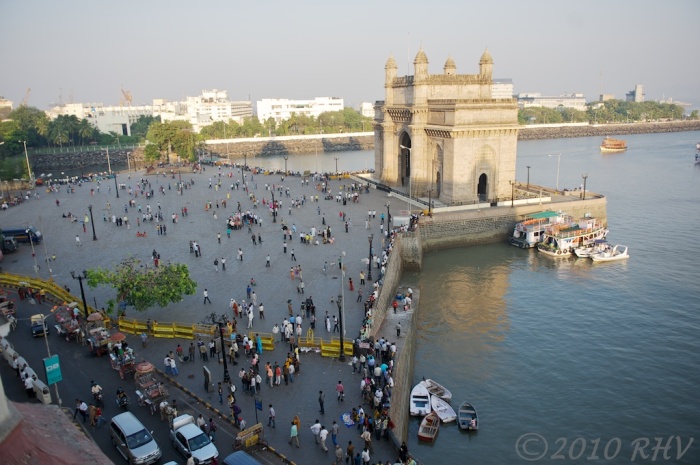
Gateway to India built in 1911.
One of the best places to capture humanity in all its permutations is the area around the “Gateway to India” arch. This area, with the Taj Palace Hotel across the street, is probably the favorite of all the sightseeing destinations in Mumbai (referred to as Bombay by local inhabitants). Both foreign and Indian tourist like to walk this area spending equal times looking at the arch and the hotel.
From dawn to the wee hours of the morning, the plaza is visited by throes interested in taking photos of both sites. Many people stop and gawk at the Taj Palace Hotel. Some may do so because of the grandeur of the hundred year old building while others may have a more morbid interest as it was the locale of a 2008 terrorist attack that killed numerous guests.
Besides the sightseers, the area is frequented by vendors of every stripe, horse drawn elaborate carriages, and armies of photographers looking to make money by photographing tourists.
Photos were shot with a Nikon D700 with Nikkor 24-70mm f/2.8 AFS zoom lens and a Nikon D300s and Nikkor 70-300mm f/5.6 AFS VR zoom lens.
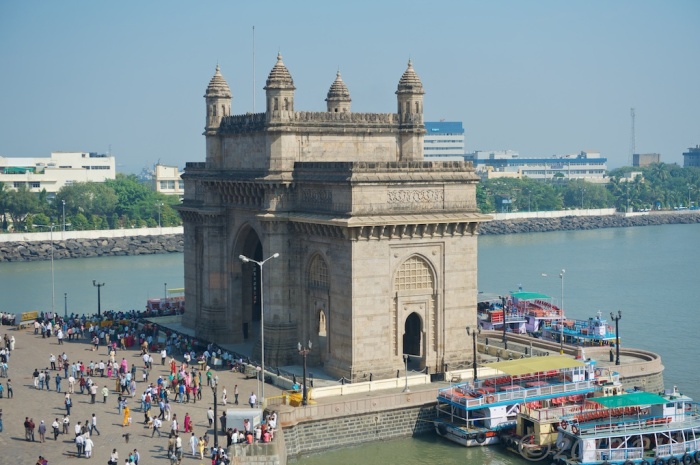
Attracts thousands a day.
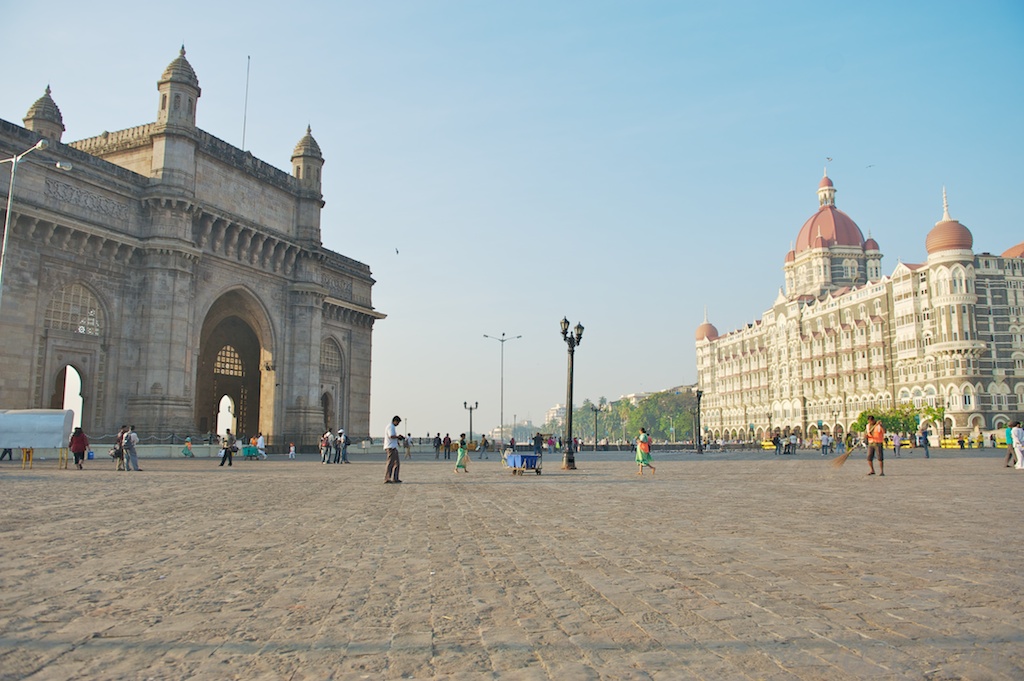
One hundred year old Taj Palace Hotel in the background.
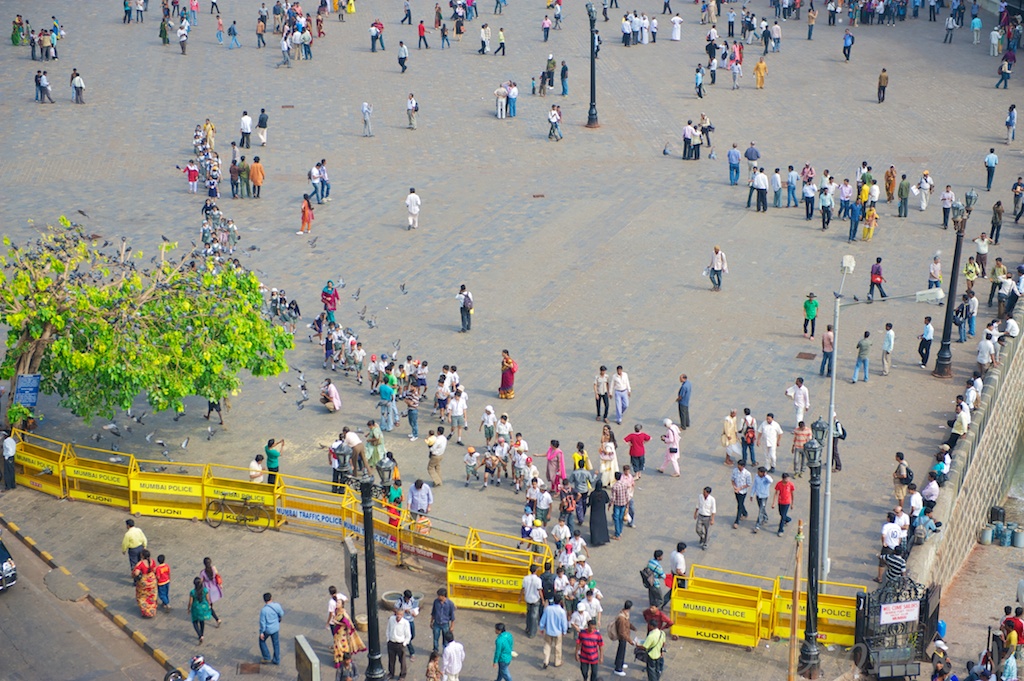
School children in a line.
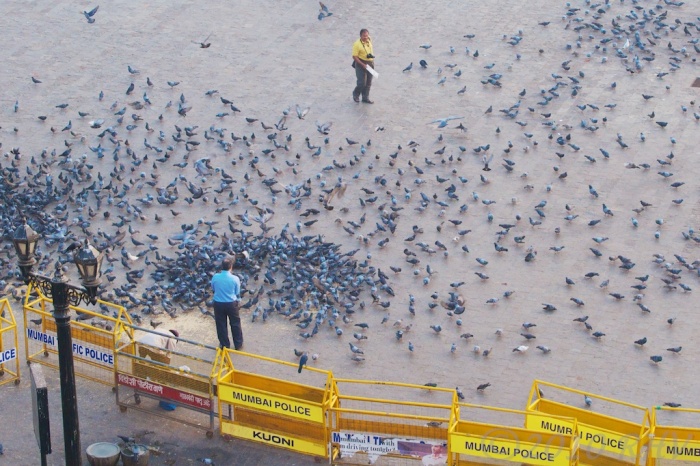
And then the pigeons arrived.
A few hours in Nara last spring.
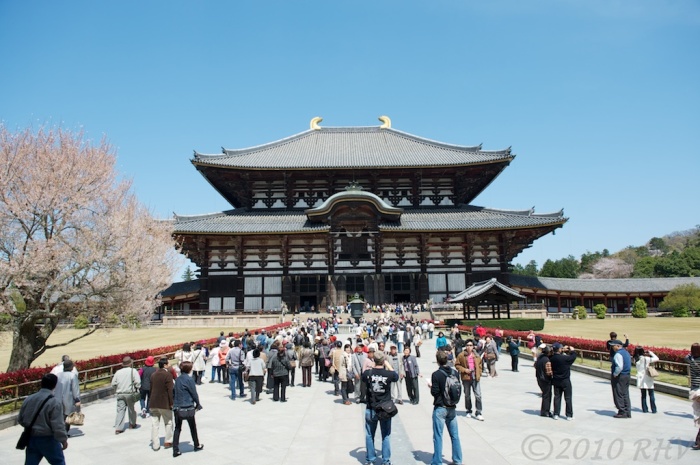
- Todai-ji, largest wooden building in the world.
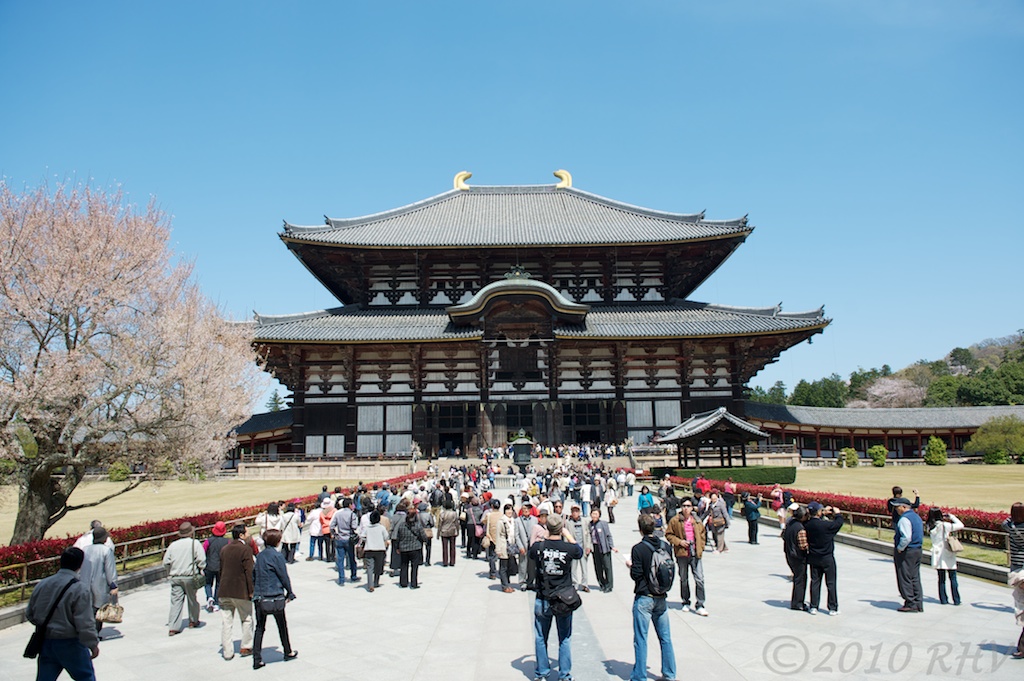
Last spring I spent a few hours in Nara, the capital of Japan over 1300 years ago and the home to many priceless temples and shrines. On this visit, I took a stroll through Deer Park and it’s adjacent temple, the Todai-Ji. This temple is a World Heritage Site and offers an opportunity to view the Daibutsu housed inside. This Buddha was cast over 1300 hundred years ago although some parts were recast due to damage several hundred years ago. However, having been here several times, I was more interested in capturing images of people and deer.
By the way, if you visit Deer Park, be very careful as they have been known to attack people on occasion. And they can be agressive if you offer them food.
Photos taken with a Nikon D700 with Nikkor 24-70mm f/2.8 zoom lens and Nikon D300s with Nikkor 70-200mm VRII zoom lens.
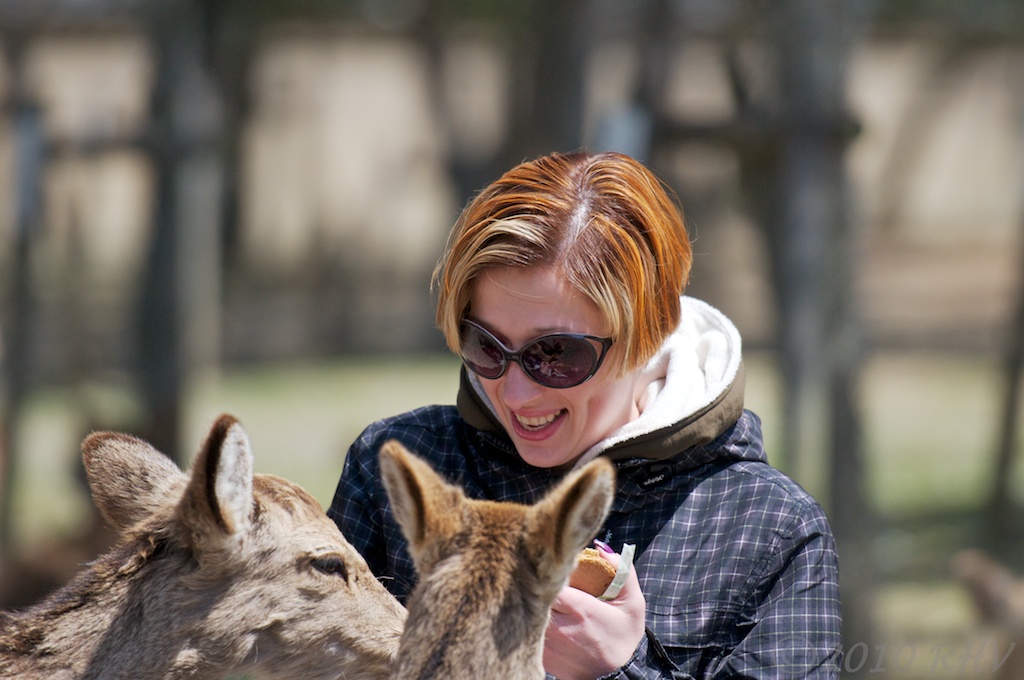
Don't get too close.
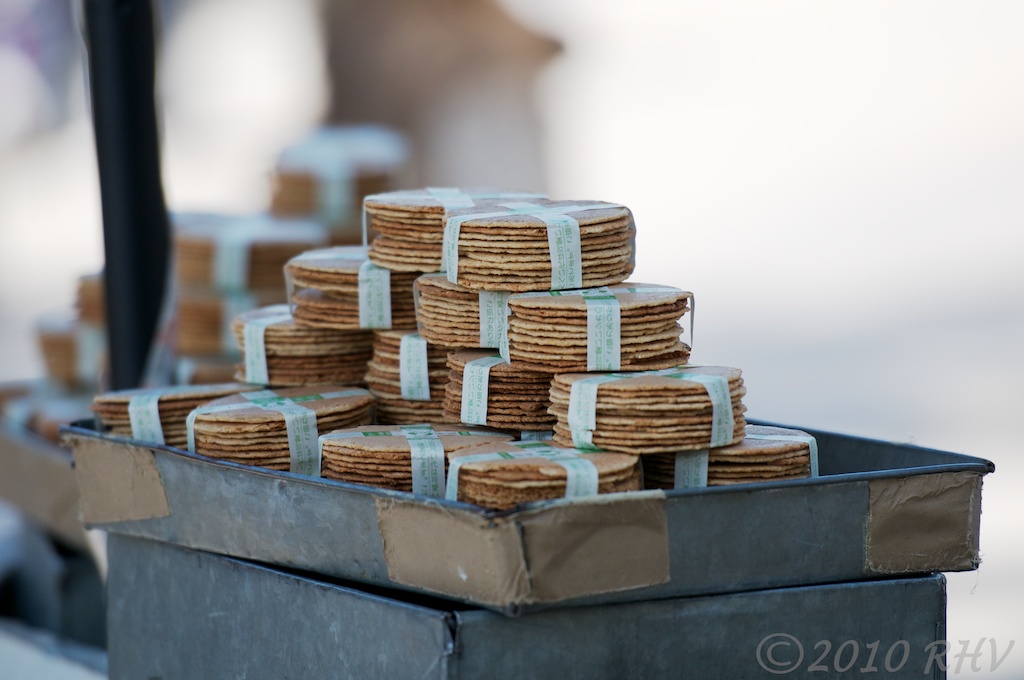
Deer food.
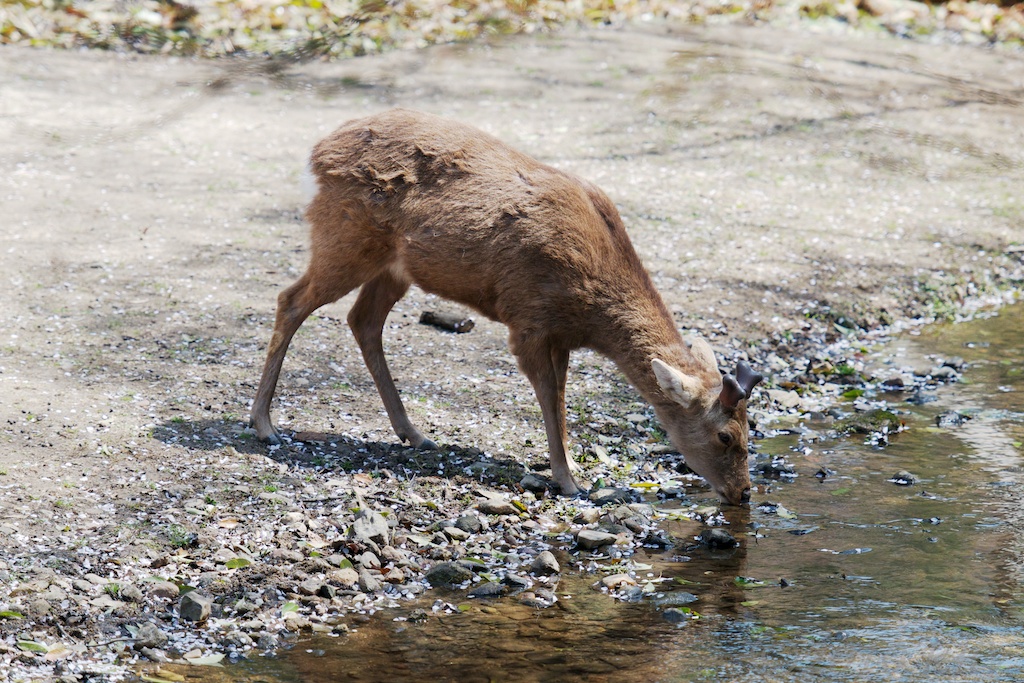
Sip of water.
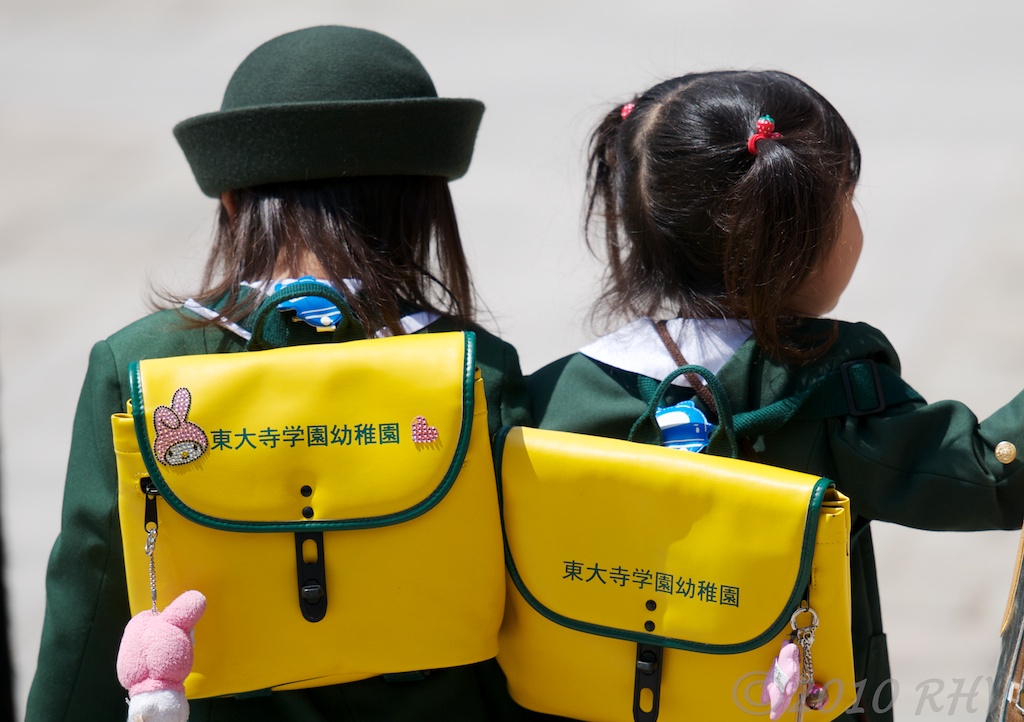
Children with packs.
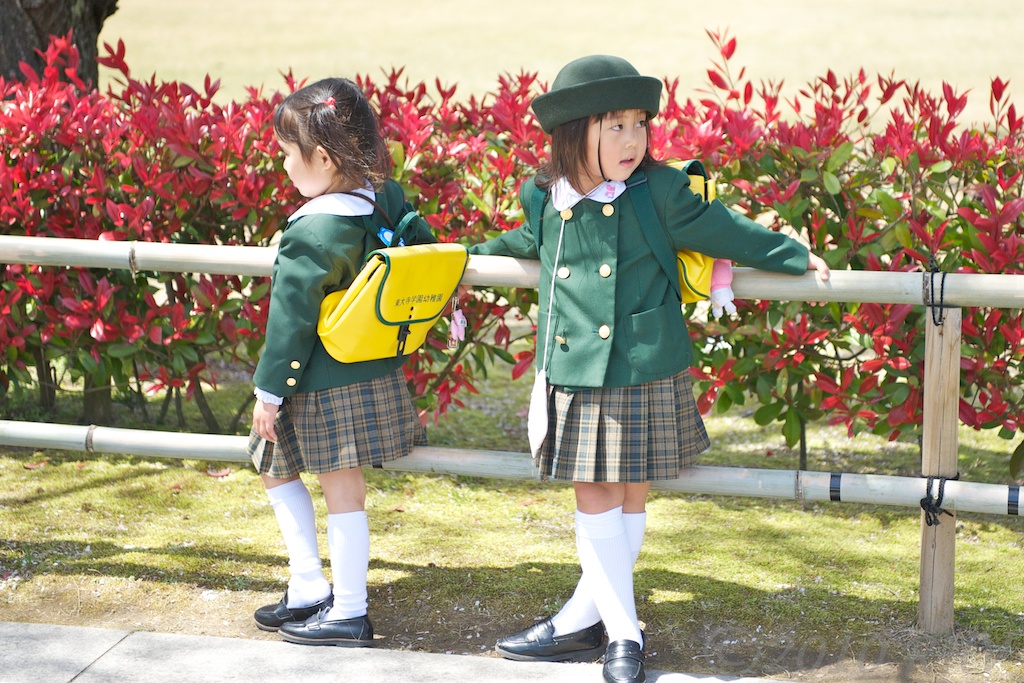
Taking a break.
Shanghai boulevard at night with Nikon wide angles lenses.
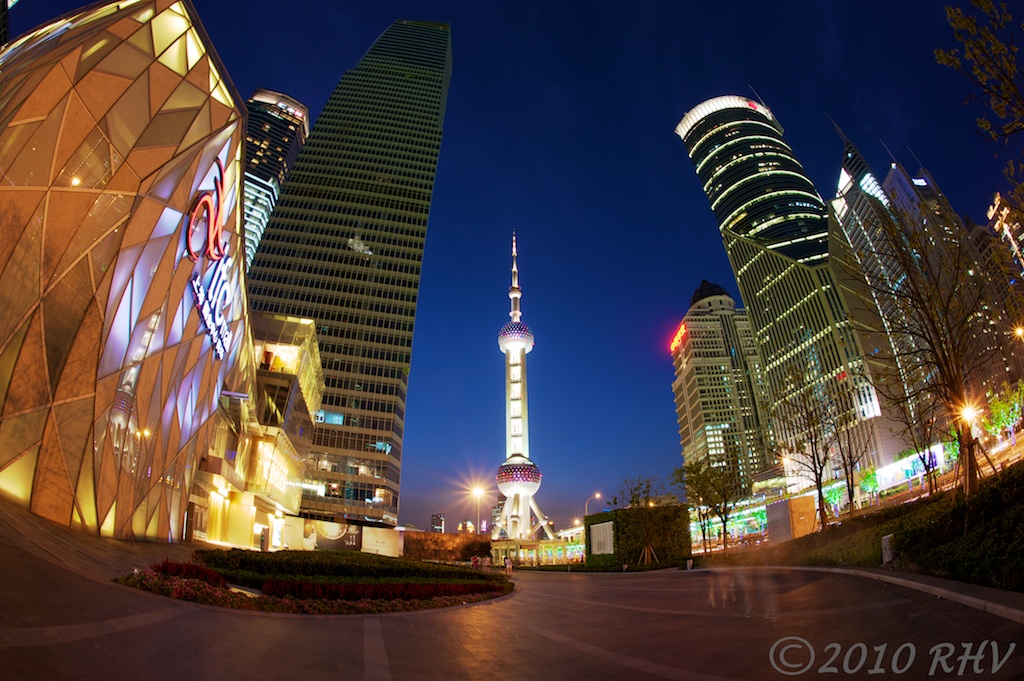
Shanghai tower with Nikon fisheye lens.
Last month I spent a week in Shanghai on the Pudong side of the river near the large TV-radio tower. One night I took a long walk with my Nikon D700 and two lenses, the Nikkor – fisheye 16mm f/2.8l lens and the Nikkor 24mm f/1.4 lens. These photos are some of the results of the photo walk. I don’t know which ones I like more, the photos with the 24mm or the fisheye. They lend a different feel to the photos but I think that they are both pleasing. I happen to like the fisheye results as the severe distortion does focus attention on the center of the photo, that is, the area in the photo that has the least distortion.
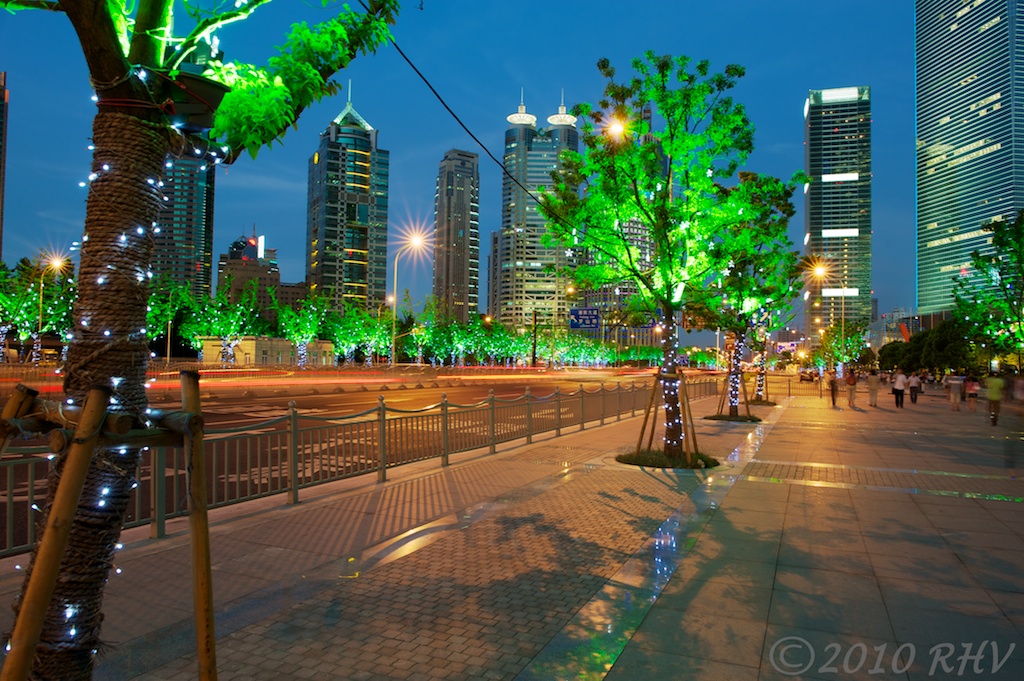
Taillights in motion.
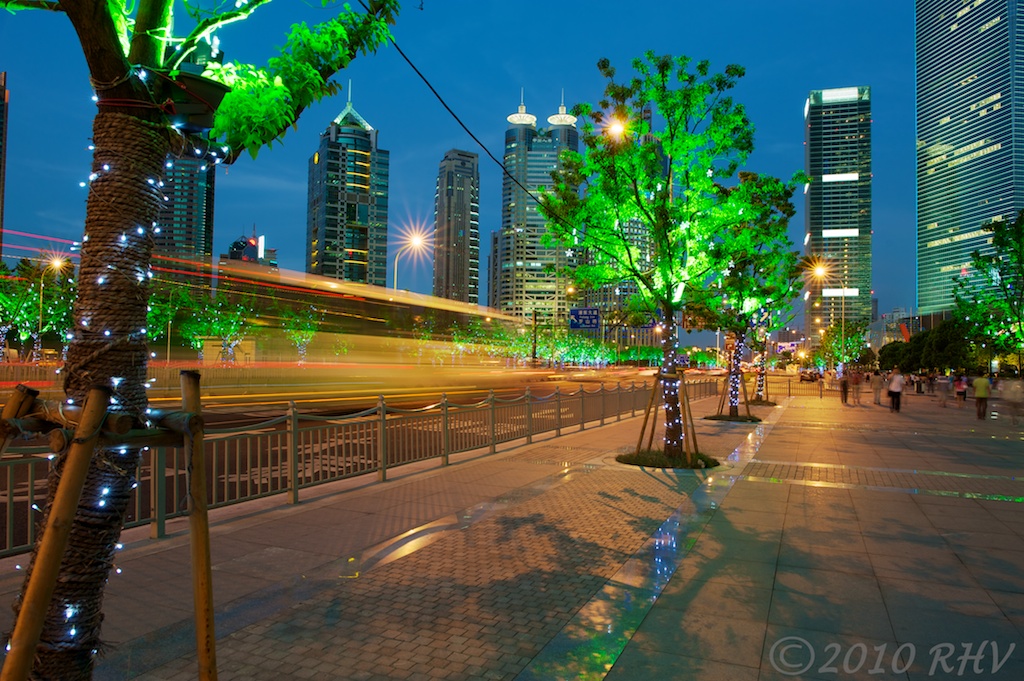
Passing bus.
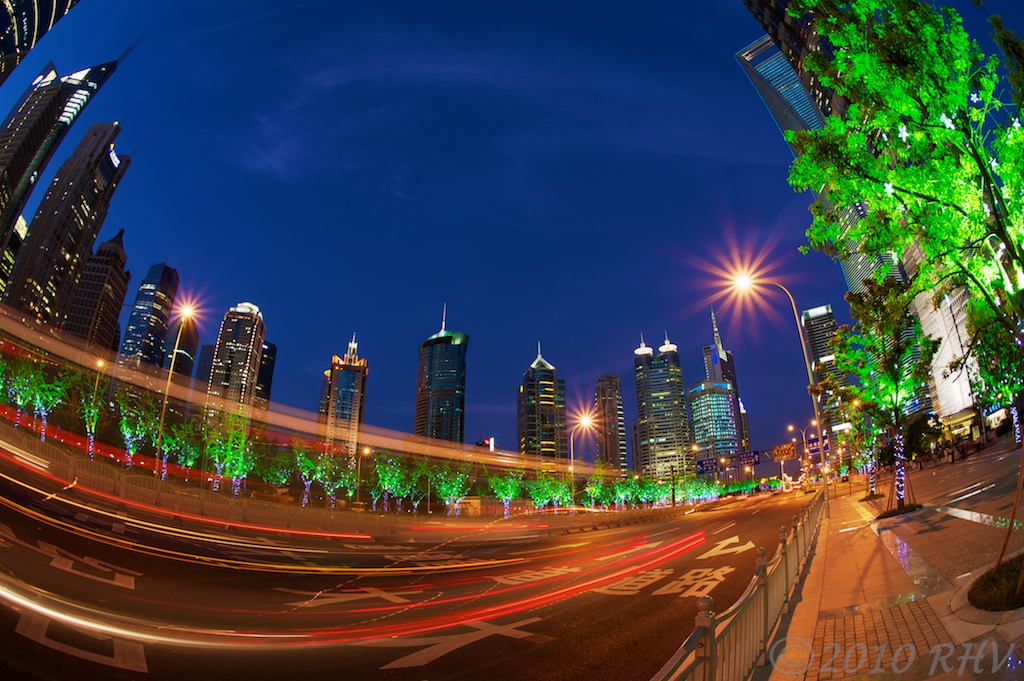
Bus in fisheye.
The Apple “Cathedral” in Shanghai. With a fish-eye lens.

Spotting the Apple logo from afar.
Last week I was staying at a hotel in the Pudong area of Shanghai. In my routine photowalk I happened to notice the Apple logo. Being a partial Apple-phyte, I walked over to the glass structure curious of what it might be. As it was in the middle of the plaza, I was a bit mystified until I got closer and noticed that the structure was the entrance to the Shanghai Apple Store located below the structure and the plaza. I did a quick walkthrough and then came back out for a few more photos. One quick spin around the store told me the Apple phenomenon is as strong in Shanghai as in many other locales around the world. It bodes well for Apple’s future. And by the way, it’s design appeared similar to some modern cathedrals. Just substitute another icon for the apple and you get my drift.
All photos taken with a Nikon D700 and Nikkor Fisheye 16mm f/2.8 lens.
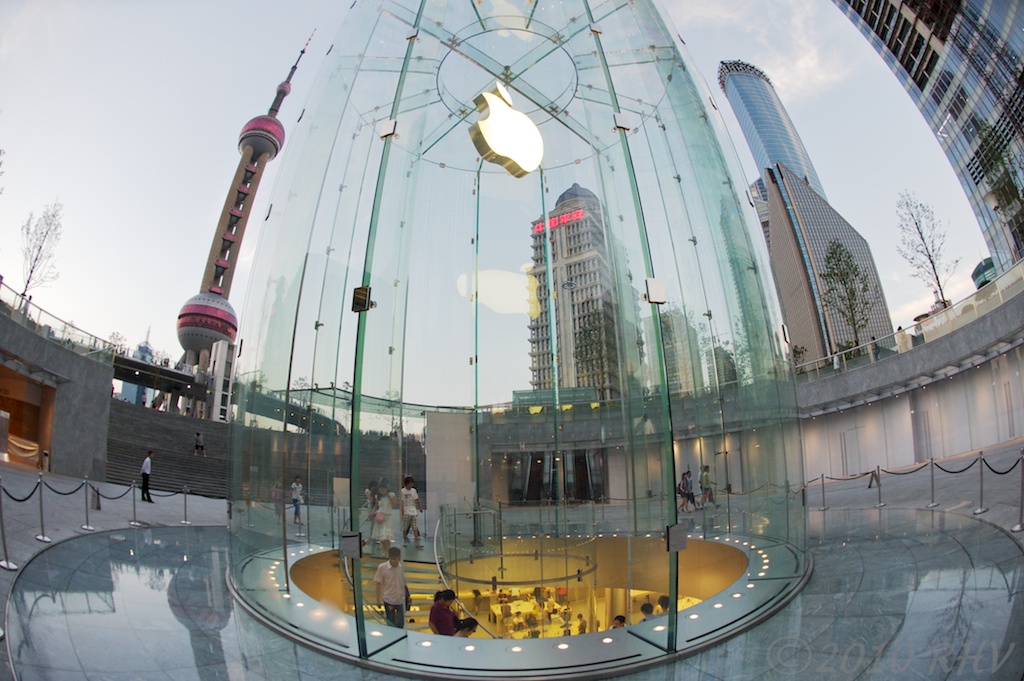
Look into the store.
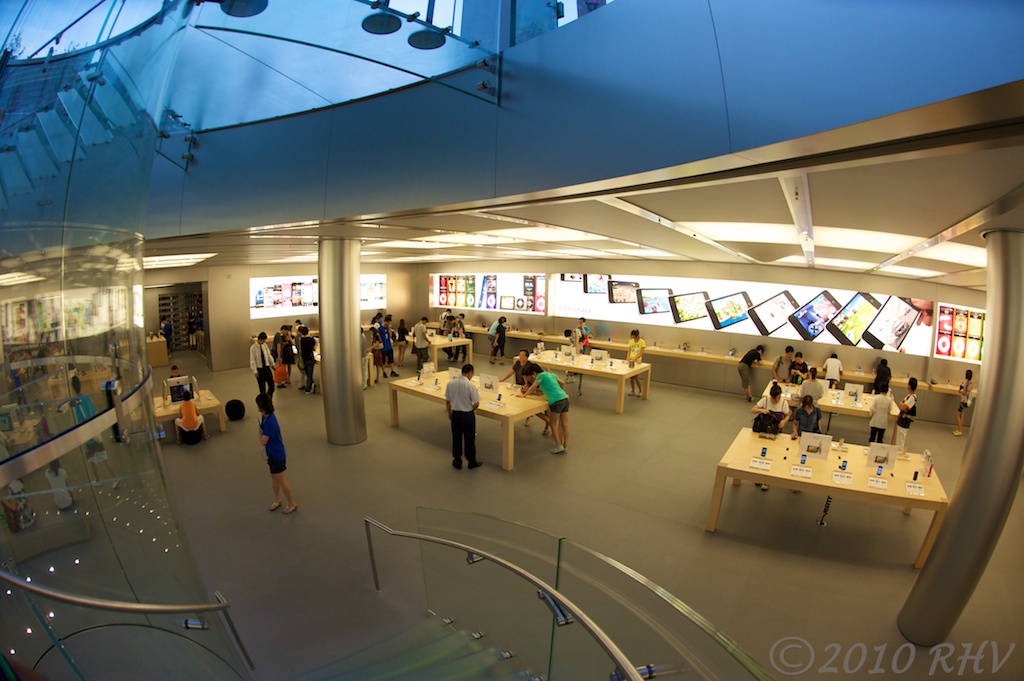
Shot from the spiral staircase.
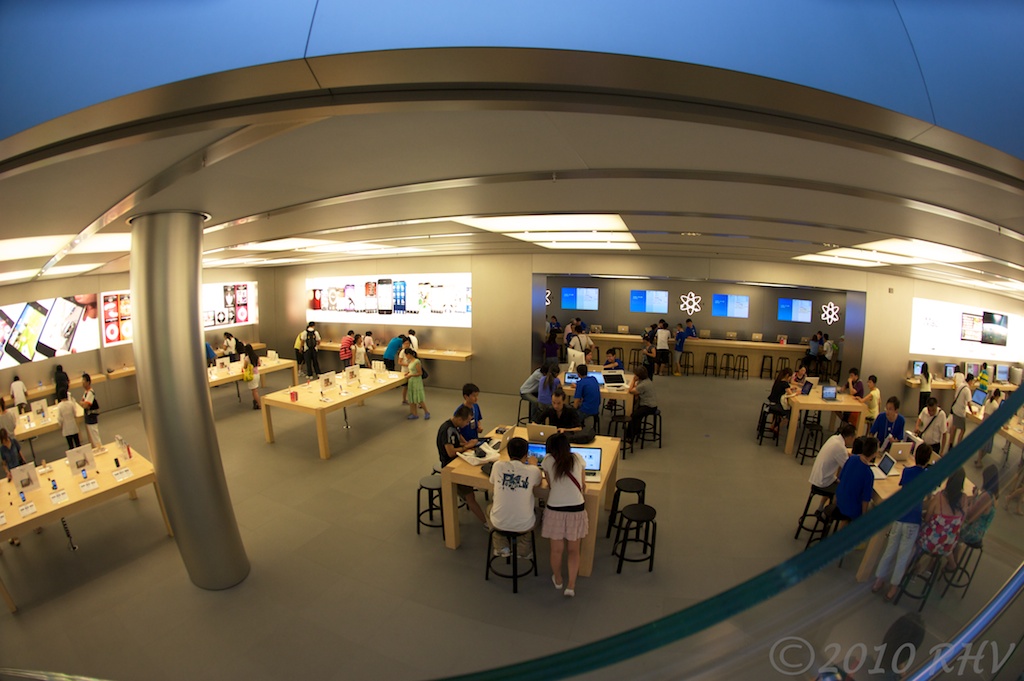
Other direction.
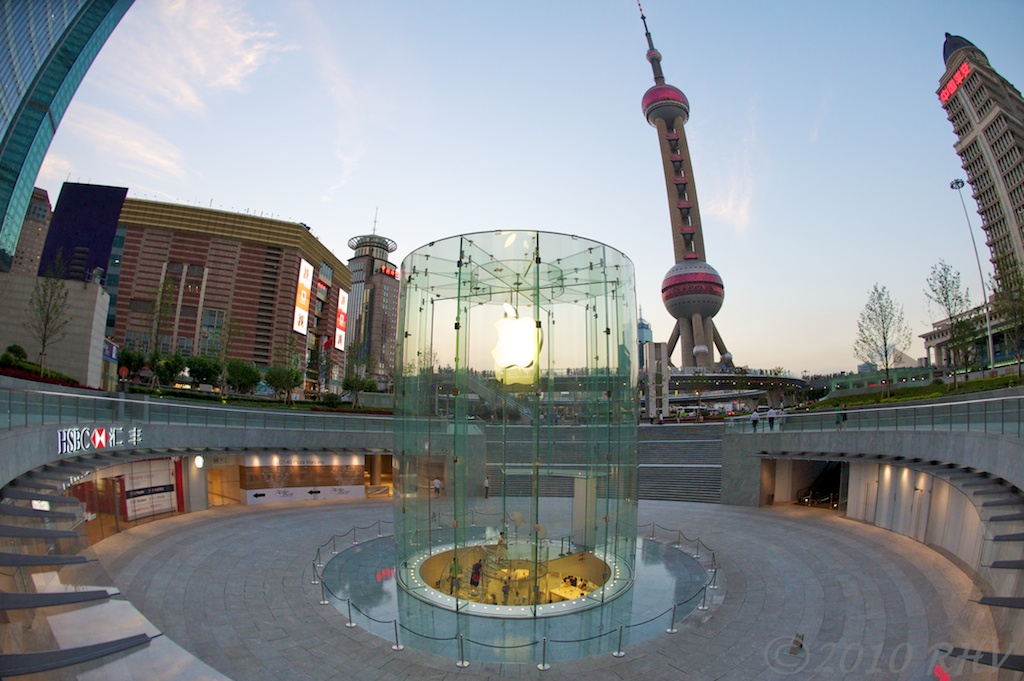
Shanghai icon dwarfed by another "icon".
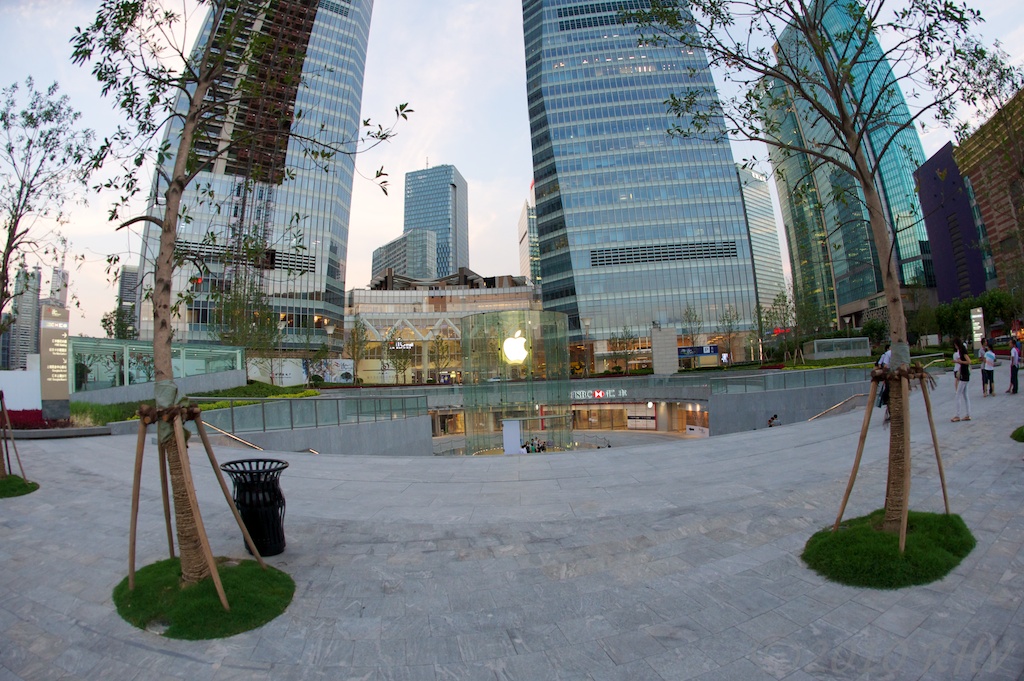
Enough is enough.
Random scenes of trains in Japan.
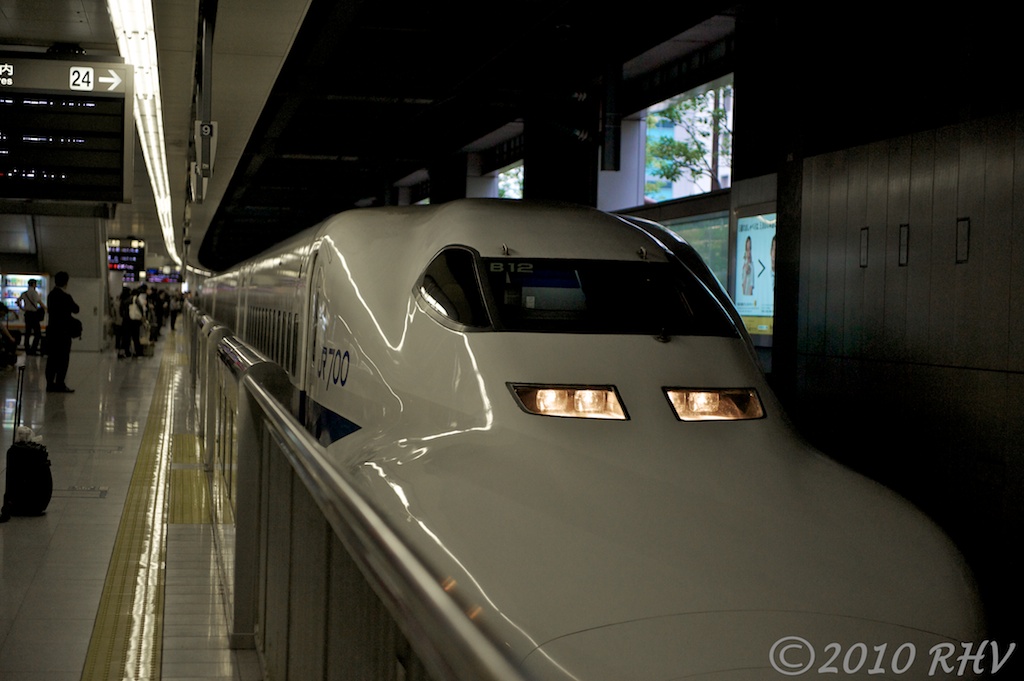
Shinkansen train at Shinagawa Station.
One thing about Japan, there are plenty of trains to look at. From quaint narrow gauge systems that take you up into the mountains to the very latest “Bullet Trains”, one is never bored looking at and shooting trains. And people that are naturally found around train stations. These photos were taken earlier this year and are good examples of addressing perspective. By virtue of their length and narrow footprint, trains naturally draw your attention to the subject of your photos. When shooting trains, quickly figure out the subject of the shot and use the train’s vanishing point to focus attention on the subject. Of course, the same goes for any scene with strong bold lines.
All photos were shot with a Nikon D700 and Nikkor AFS 24mm f/1.4 lens or Nikkor AFS 24-70mm f/2.8 zoom lens.
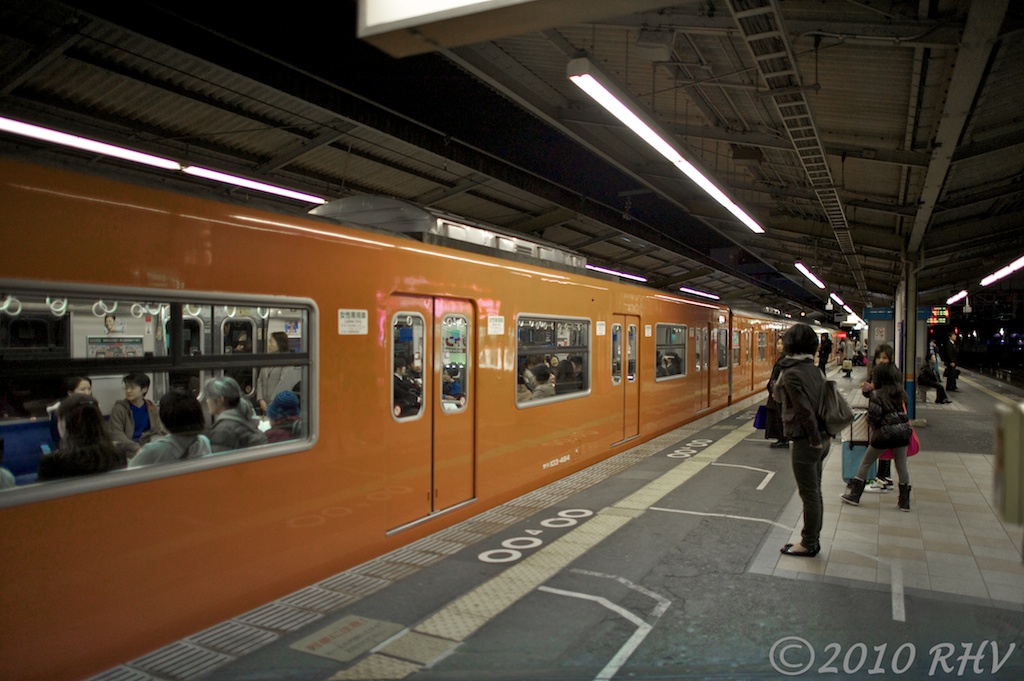
Osaka train station with waiting woman.
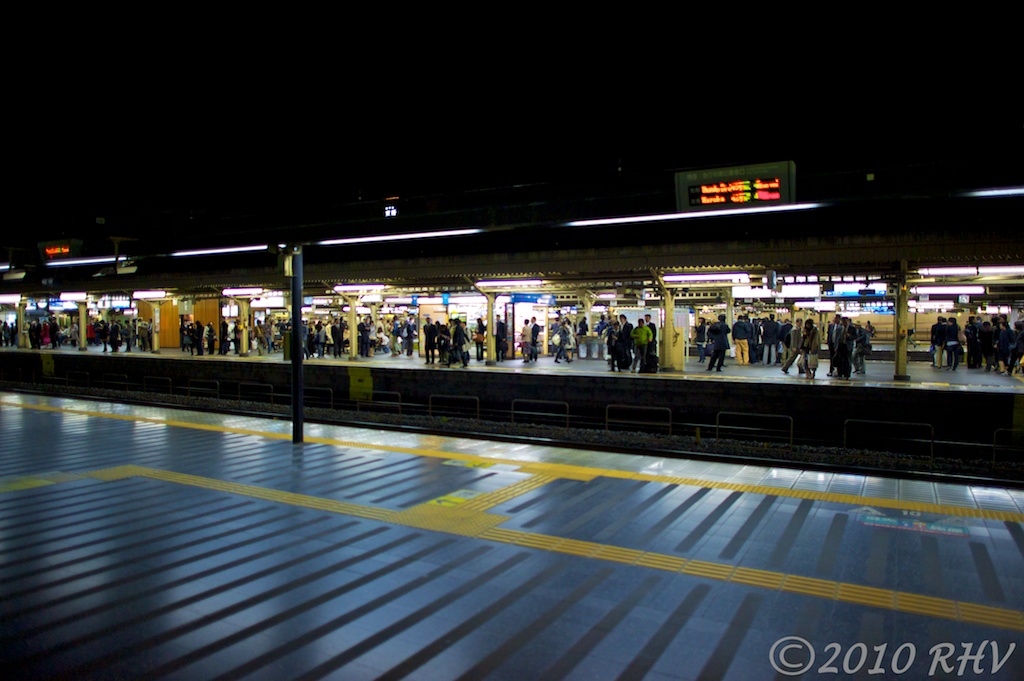
Works with bold lines.
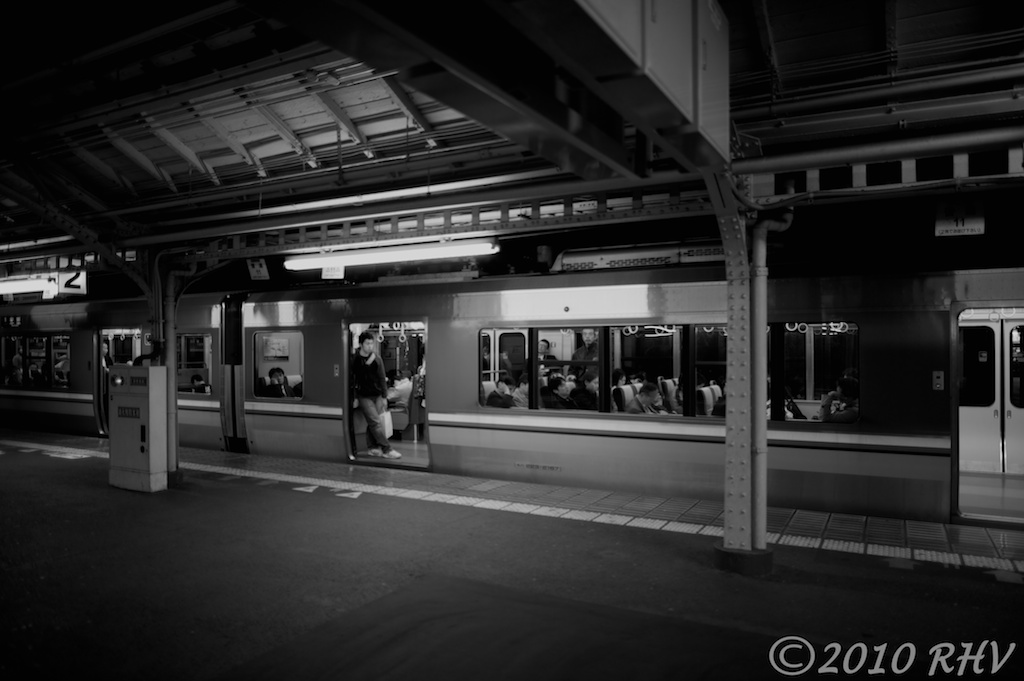
Trains, lines, columns and rafters.
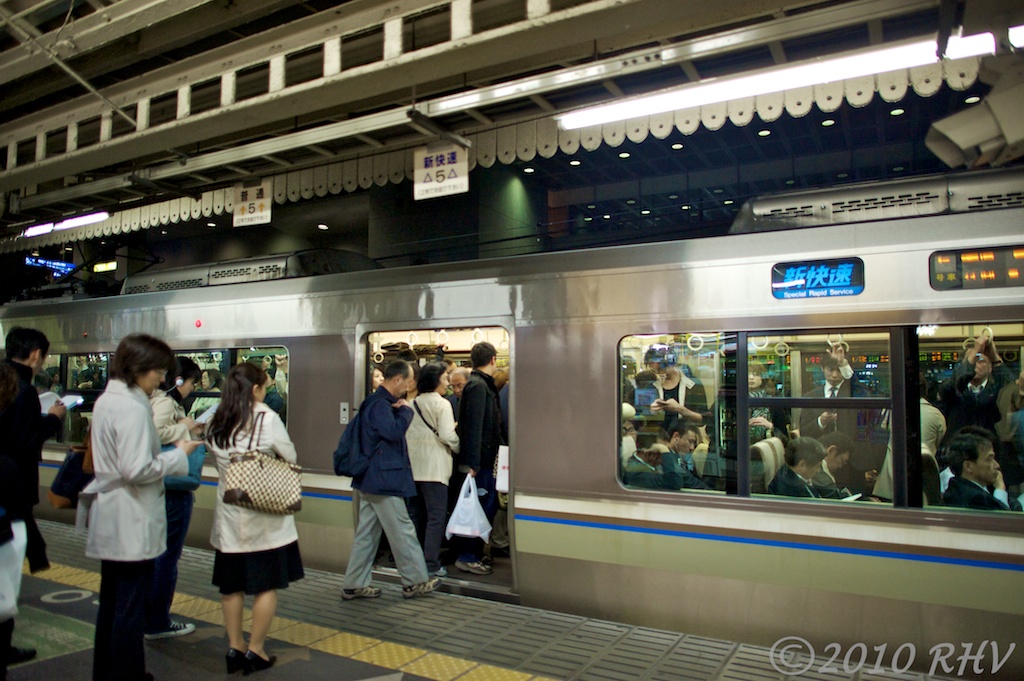
All aboard.
Boats on the Mekong, Cambodia to Laos
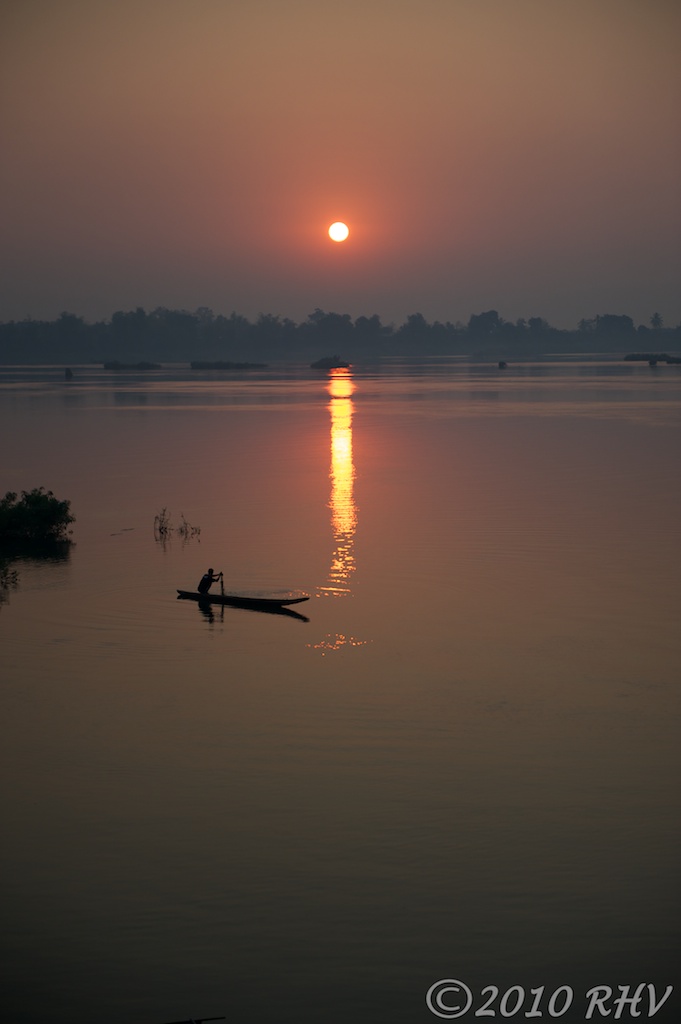
Sunrise from Don Khong Island.
Life on the Mekong River in Cambodia and Laos hasn’t caught up with the 21st Century. Yet. There is still a connection to quieter times, a slower pace of living, that belies the dramatic changes that will occur on the Mekong. From China to southern Laos, there are plans for over a dozen dams that the authorities say will benefit all the people of the region. They come up with a myriad of benefits, from cheaper electricity to reduced flooding. In looking at this future, I have a hard time envisioning the simple life that exists there now. I recommend that you visit this area before it’s all gone.
Photos taken with a Nikon D700 and Nikkor AFS 24-70mm f/2.8 zoom lens and a Nikon D300S and Nikkor AFS 70-300mm f/4.5-5.6 zoom lens.
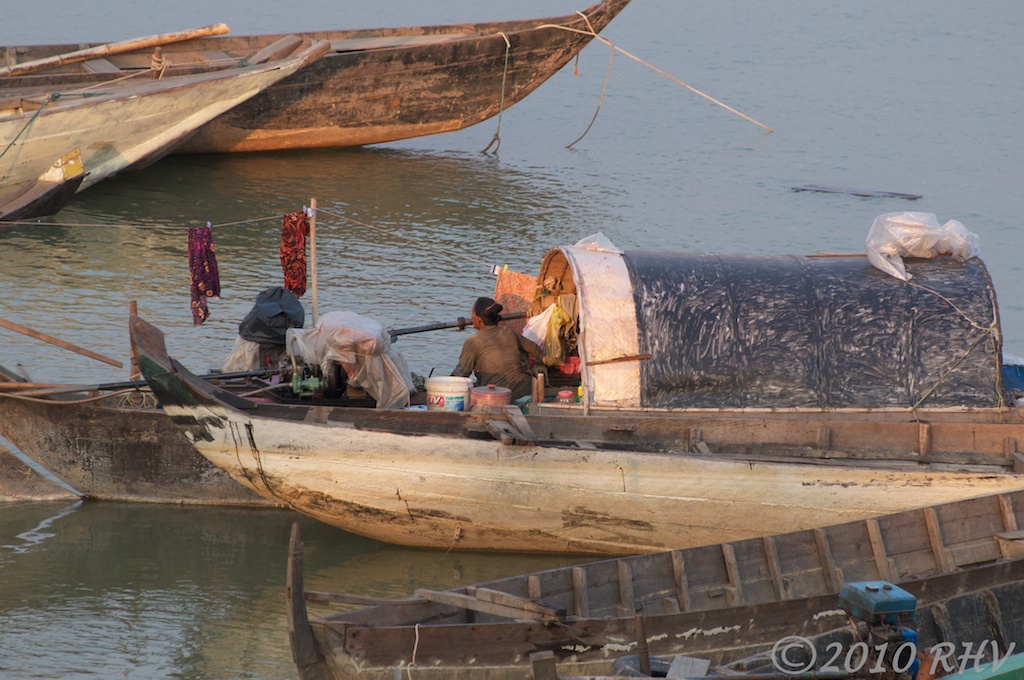
Vietnamese fisherman at Stung Treng, Cambodia.
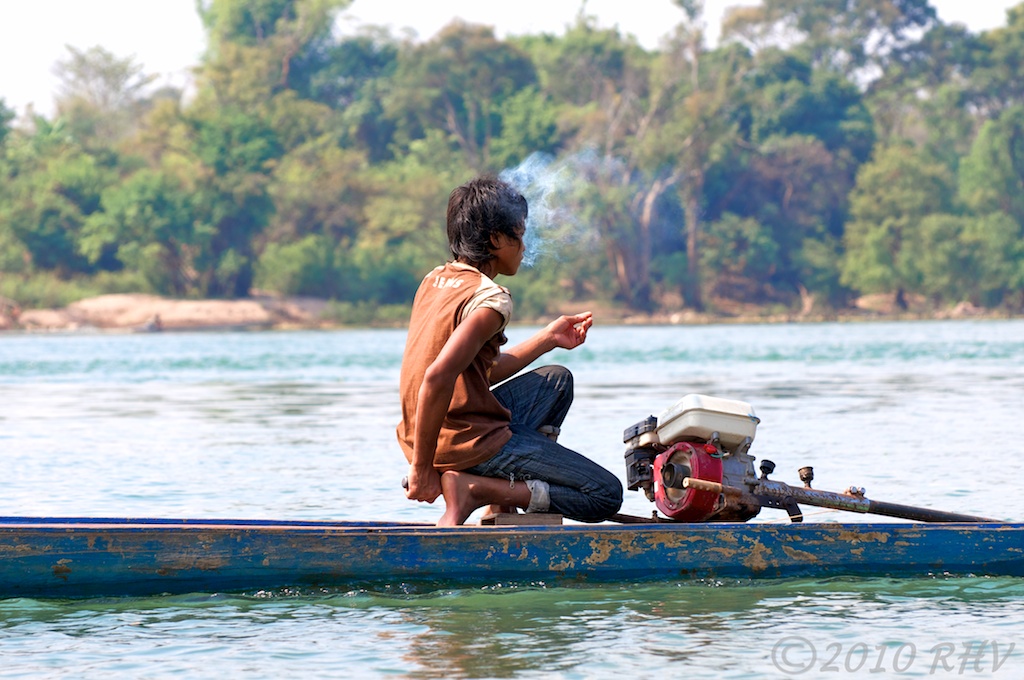
A smoke on the boat.
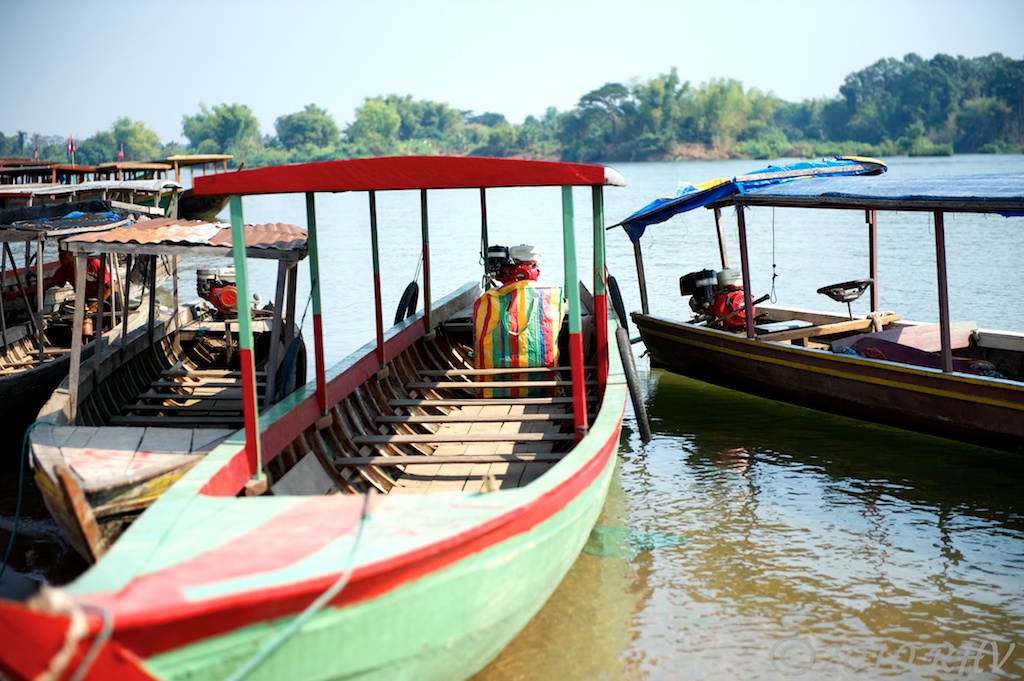
Time to board.
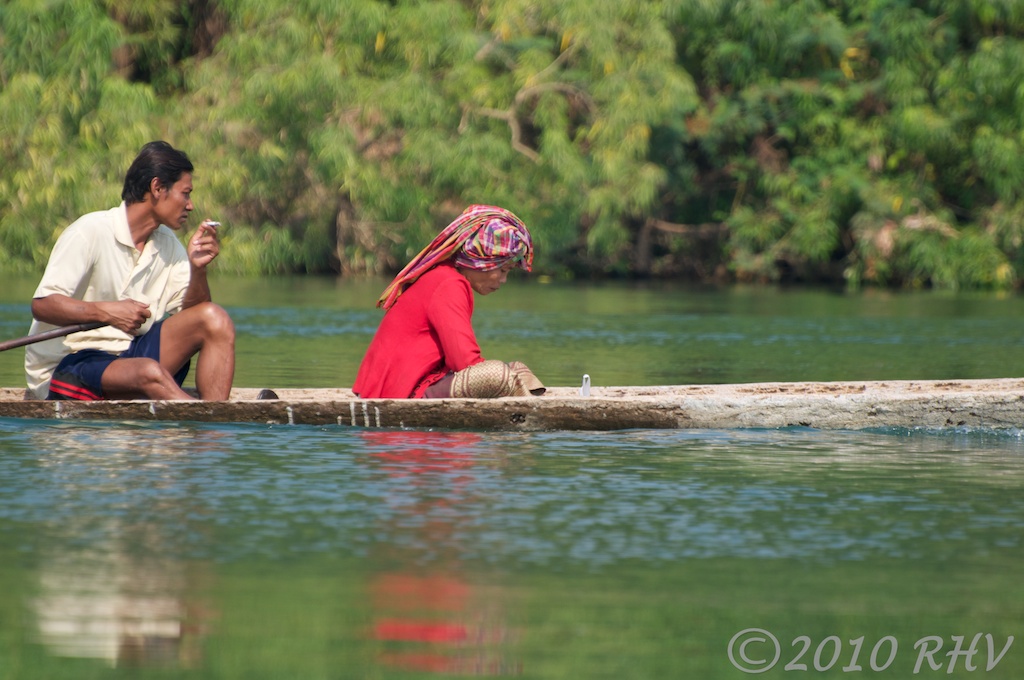
Lost in thought.
Irawaddy Dolphins on the Mekong River
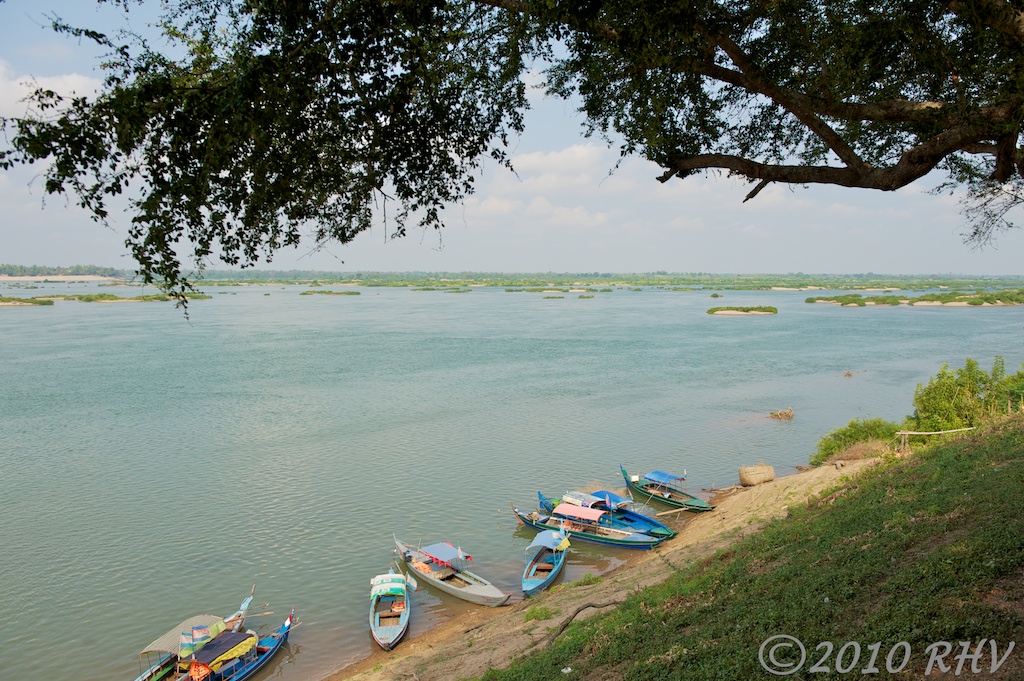
Deep pool in the background. Home to the dolphin "pod".
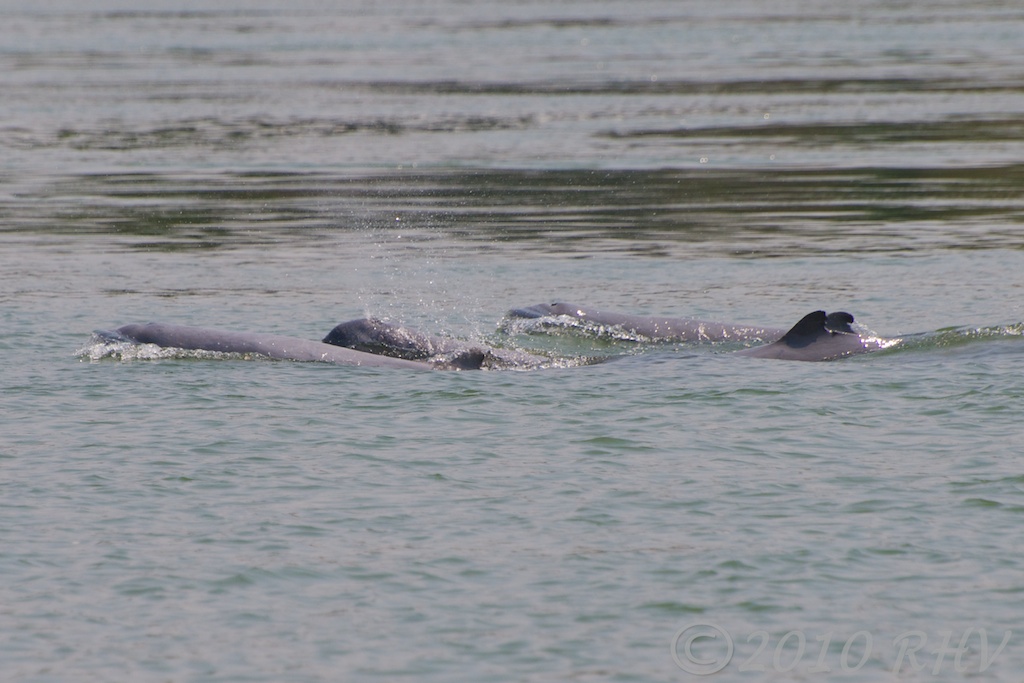
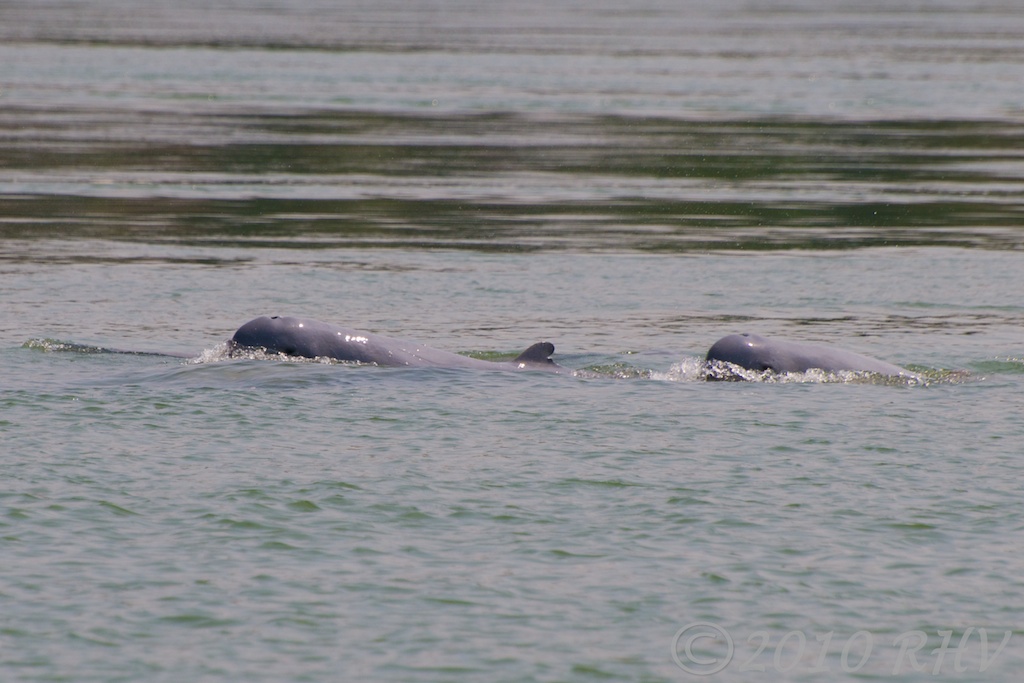
Just outside Kratie, Cambodia, on the Mekong River is a very deep pool of water that is home to a “pod” of Irawaddy Dolphins. There are a couple dozen of these very rare dolphins that used to number in the hundreds before the Khmer Rouge decades back slaughtered most of them. The dolphin is not considered an endangered species as there are several thousand in Bangladesh although their numbers in Southeast Asia are very small. There is also a small pod in Laos on the Mekong just above the border crossing.
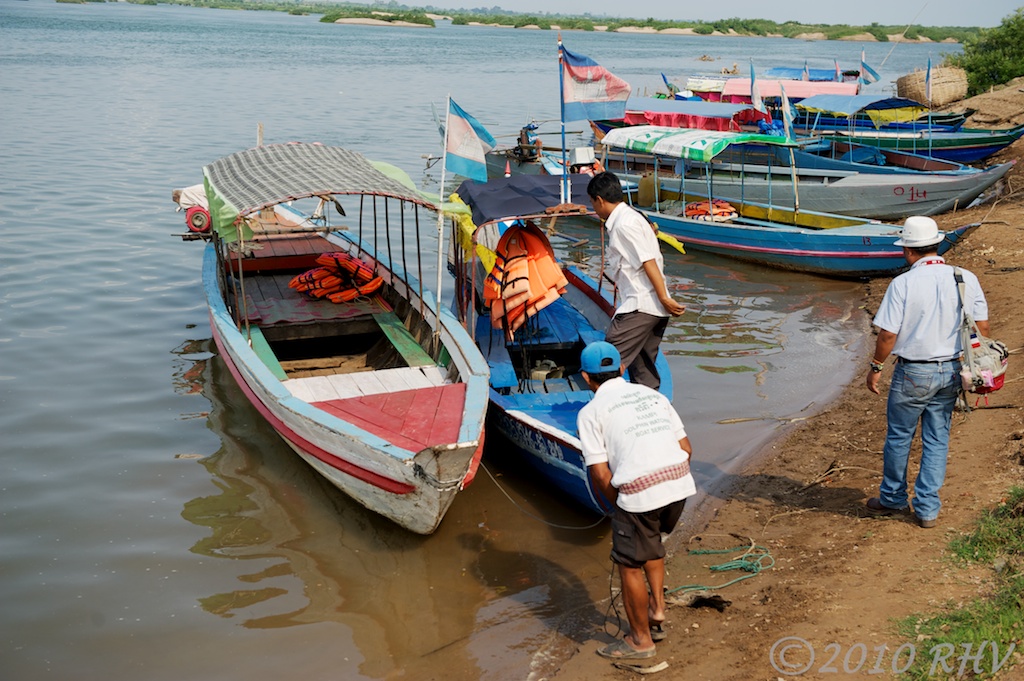
Typical guide boats.
These dolphins are very shy and difficult to photograph. Combine that with a rocking boat in the river current and it makes for trying conditions.
The dolphins live in this deep pool, perhaps 800 meters deep. Its depth allows the mammals to adjust to the changing temperature of the water throughout the year. And because the pool is downstream from very shallow water, food is ample.
The river guides are attuned to the comfort of the dolphins so that they maintain a distance of 50-100 meters. And the guides drift with the current, again to not frighten the dolphins.
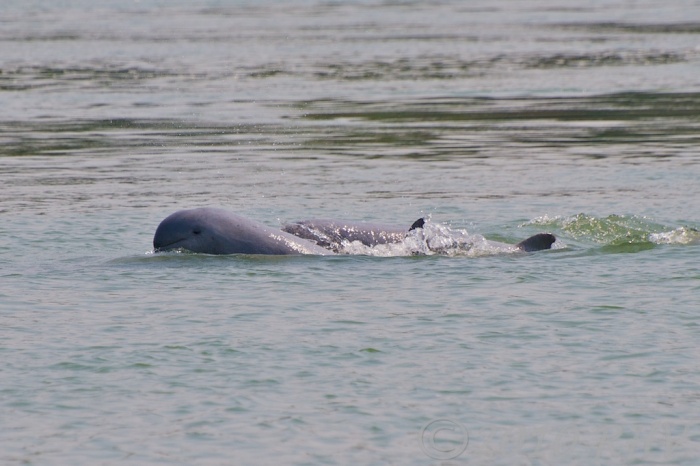
Up for air.
All photos were taken with a Nikon D700 and Nikkor AFS 24-70mm f/2.8 zoom lens or Nikon D300s and Nikkor AFS 70-300mm f/4.5-5.6 VR zoom lens.
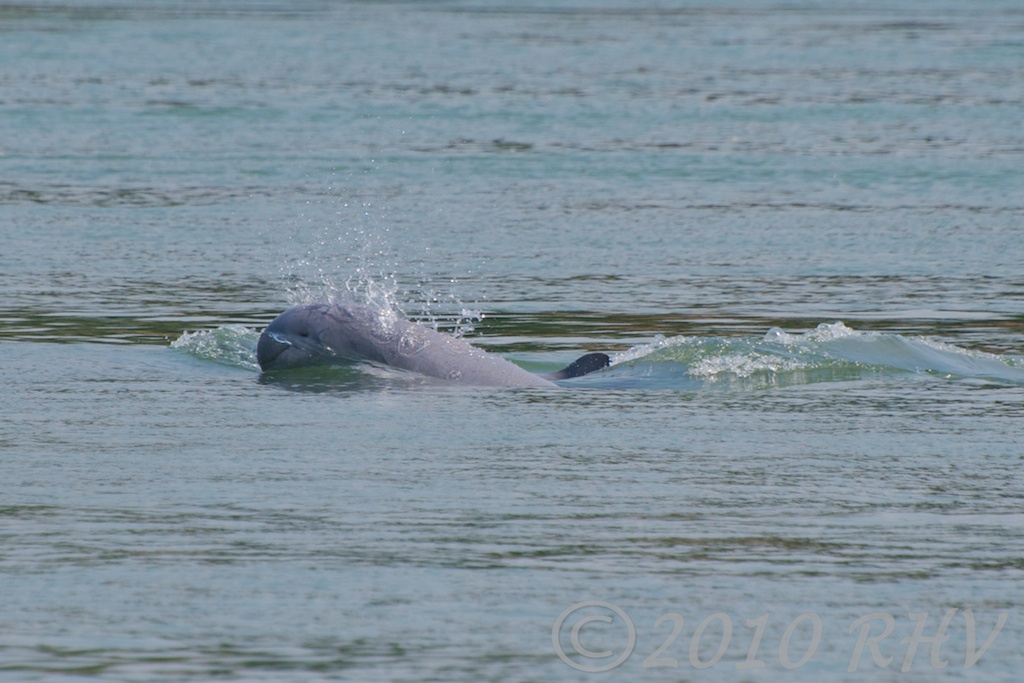


 Leo Laksi's Bangkok And Back